The argument against the mass use of Auto Tune was never about favoring “technical facility over inspiration,” as Alex Pappademas monstrously wrote in a 2011 Times editorial. If it were, the argument would be in favor of Auto Tune. This is about ignoring the revelations contained in the human voice.
Auto Tune is plastic surgery. It is as if everyone suddenly sewed full face masks to their heads so you could no longer see a person’s true expression, only a cheap plastic surface. I believe it conceals our ability as listeners to discern the difference between arrogance and humility, hope and despair, honesty and lies, leaving us with a horde of arrogant, despairing, and lying poseurs.
I do not care that big artists have used it. Or that people say it helps people. Or that other creative things are going on in the song. Ability is irrelevant. I am more than willing to hear someone who is off, flat, sharp, strained, and uneven.
Dylan famously sang off, Joni Mitchel had an unstable pitch, Johnny Cash, Lou Reed and Leonard Cohen all had limited range and often drifted and strained. Billie Holiday bent pitch constantly, valuing emotional phrasing over precision. That is the whole point. Those moments are where the person is interacting with the story of the music.
The difficulty of explaining the phenomenon comes down to the fact that it is such a small cleansing procedure, a layer of texture and variation removed, should have such importance. The fact may be that the excessive overreach of technology is already reflected in our everyday life, from the design of the Cybertruck, back to shopping malls replacing a circuitous journey to urban downtowns in the 80s.
When those moments of curves are removed, the art becomes a suffocating mound of kitsch, a totalitarian and ridiculous structure whose purpose is to be ashamed of being human. Already we have actors scanned into systems and CGI’d into action rather than shooting live people through a camera.
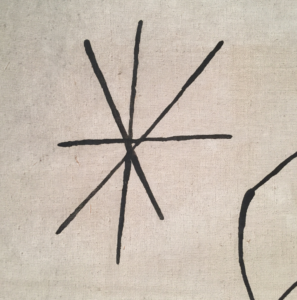
And should we clean up Miró’s lines and dots so they are straighter and more equidistant, or scan Matisse’s drawings and redraw them with a ruler?
The truth is that the human voice was never exact, and musical notes were never meant to be right on. Pitch is a living thing, negotiated in real time between bodies, breath, and the room they share.
A = 440 Hz Is A Modernist Construct
Pythagoras, in the 6th century BCE, linked pitch to mathematics. He noticed that dividing a vibrating string into simple ratios produced intervals that sounded stable together. Octave 2:1. Fifth 3:2. Fourth 4:3.
Aristoxenus disagreed. A generation later, he argued that pitch should be understood simply by the ear, not by numbers. Aristoxenus treated pitch as more mysterious.
We do not follow Aristoxenus today because his ways could not be easily standardized, measured, or controlled. The truth, Aristoxenus and I believe, is that you can sing slightly out of key and still sound good.
Moreover, the specific value that “A” should be 440 Hz was not ancient, natural, or inevitable. For most of history, there was no fixed A. It was formally standardized in 1939, which coincidentally was the peak of modernism, authoritarian systems, and industrial rationalization.
This is the same moment when Joseph Stalin was enforcing centralized planning, Benito Mussolini had already reshaped Italy through monumental modernism, and Adolf Hitler was reorganizing culture, labor, and aesthetics around uniformity and scale. Robert Moses was literally the chief organizer behind the 1939 New York World’s Fair, the man who wanted to tear down Greenwich Village for a highway.
Before that, “A” ranged wildly. Baroque A was often around 415 Hz. In parts of the 19th century, orchestras crept higher and higher, sometimes above 450 Hz, because brighter sounded better. Giuseppe Verdi argued for a lower standard around 432 Hz to protect voices. He lost.
So when people talk about “correct pitch,” they are talking about an administrative decision from a time of dictatorial men, which today, in my humble opinion, is taken too much as fact by the unthinking.
All of this is to say that we have been talking a lot about musical instruments, which are just that: instruments.
A Human Being Is Not An Instrument
Immanuel Kant, in his Critique of Judgment, writes that “the beautiful is the symbol of the morally good,” that good taste is shaped by the thinking faculty of our moral decisions. When one says that using Auto Tune across an album is an “aesthetic choice” or a matter of taste, they are right.
Auto Tune is, when employed as it has been, morally kitsch: a bold aesthetic of false agreement.
Milan Kundera, who lived through the horrifying effects of the Communist Party of Czechoslovakia, famously picked apart the word kitsch. Kundera defined kitsch as “the absolute denial of shit.”
By this he meant that kitschy art excludes everything in human existence that is unacceptable, disturbing, ambiguous, or unresolved. It presents a world where pain, doubt, contradiction, and bodily reality are edited out so that everyone can agree on a pleasant, sentimental image.
Kundera extended his idea of kitsch beyond the arts, into politics and ideology. Kitsch demands a single, “correct” emotional response. It says: everyone must feel the same way at the same moment. Once that agreement is achieved, questioning becomes immoral.
Auto Tune belongs to this lineage. It removes the “voice” from the voice, at the same time that the voice seems to have less to say. It erases the moment of reaching, of seeing behind the mask, of being vulnerable in public, of not being a mechanical instrument.
As modernist purity wears thin across design, architecture, and culture, so too does our patience for those who take technology too far, mistaking the erasure of humanity from the world for progress.
To those who defend Auto Tune as an achievement or some sort of improvement: why are you ashamed of being a human?
All of this is summarized best, for me, by dancer and choreographer Doris Humphrey:
“Movement, whether it be dance or any other movement, has its own laws, which are not the laws of mechanics.”
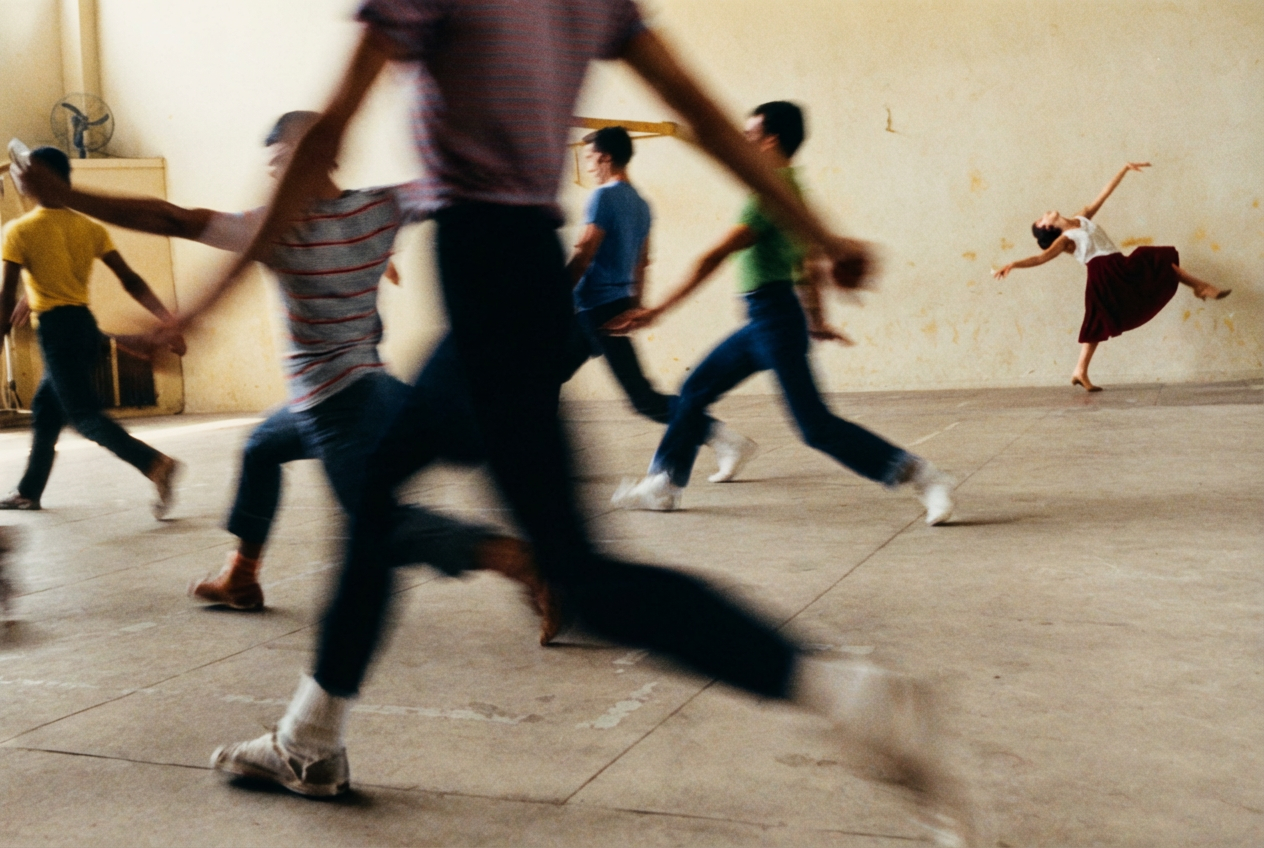
Doris argued that once motion is forced into rigid geometry, it stops being human expression and becomes an imitation of machines. Dance, for her, had to emerge from imbalance, effort, and correction.
The interesting story of design, art, music, and cinema is a human reaction to imperfection and subsequent correction. Not straight lines. Not perfect symmetry. Not imposed precision.
“The body is not a machine, and movement that imitates the machine denies the body’s nature.”
 Pina Lomb
 Valeria Krel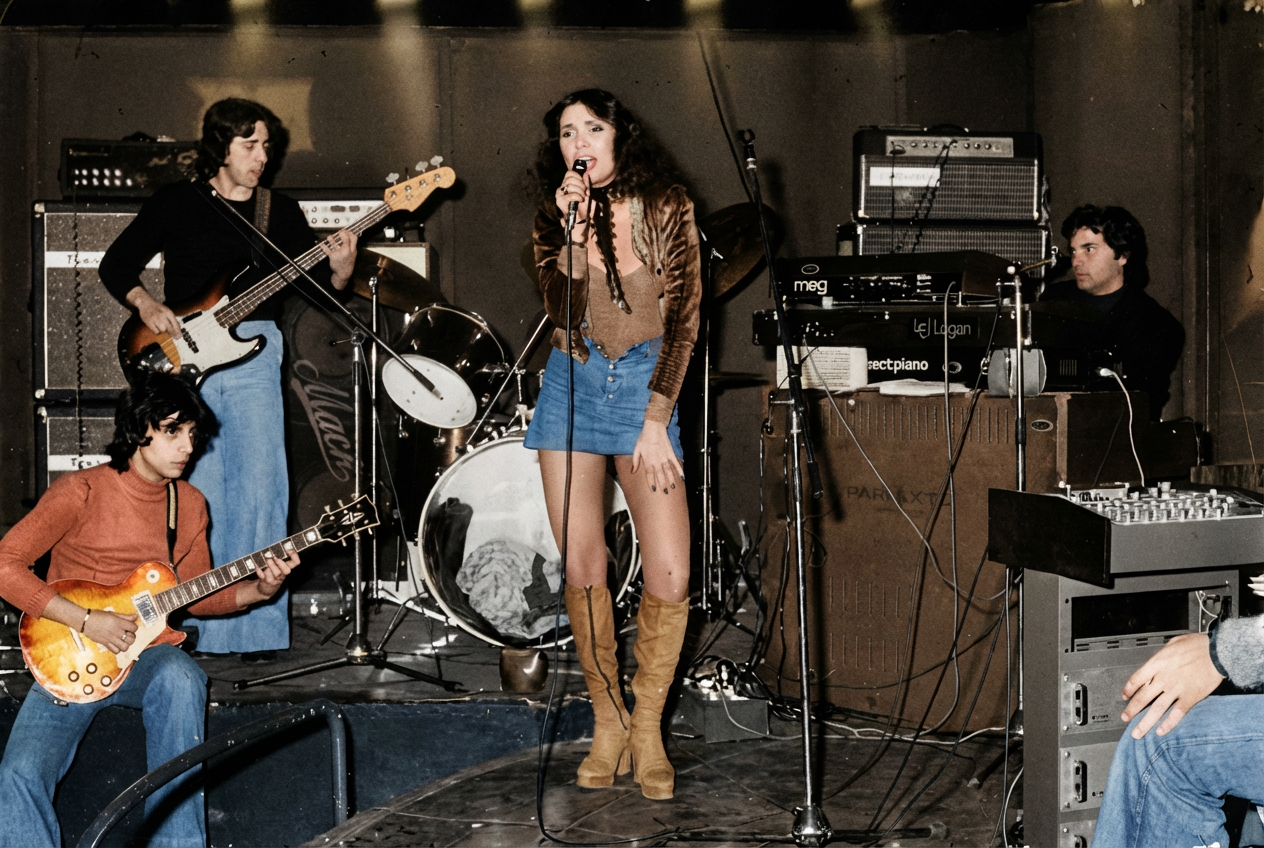
 Bob Loblaw
 Richard Aubern
 Editors