 John White
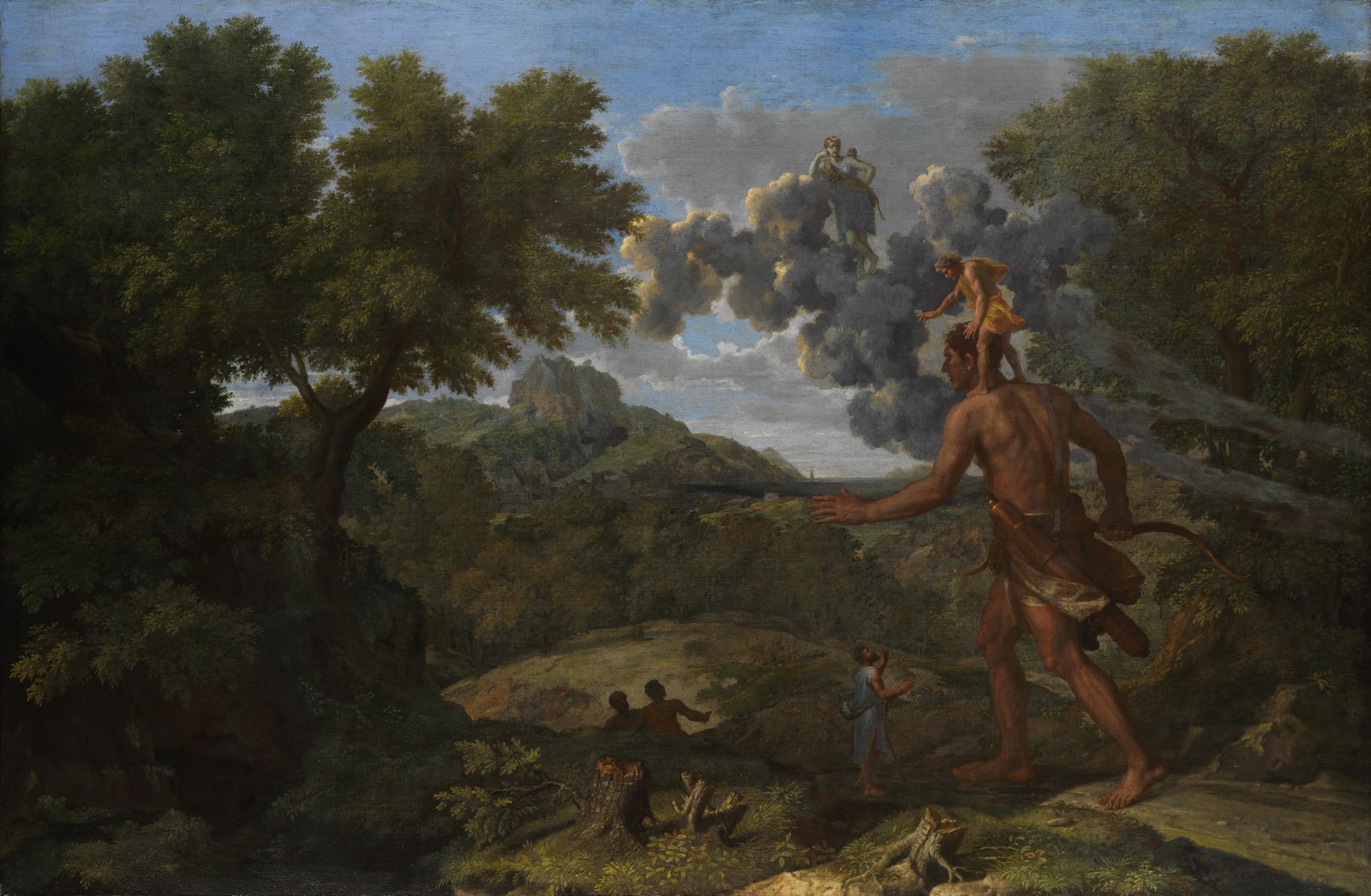
Leif Fairhair was a Viking known as The Big Man. His ticket to fame was having been born sometime in the 1020s and still being alive today. His story is that he wandered away from a small encampment in Canada and settled in the overgrowth of the northern wilderness. Seen occasionally, like Bigfoot, Leif was an exceptionally tall man, hence the name, over seven feet, who was said to have developed a method of living forever. Like Bigfoot, The Big Man, they said, hides very well and lives, in the summertime, on wild game and fruit and, in the snowy hell of Northeastern winters, on ice fishing, leeks, and hunting brown bears. Leeks, of course, being native to the region, and brown bears, although rarely eaten, can be cooked in stew and are said to taste like pork.
Talk of The Big Man peaked in the 1700s, with the arrival...
Leif Fairhair was a Viking known as The Big Man. His ticket to fame was having been born sometime in the 1020s and still being alive today. His story is that he wandered away from a small encampment in Canada and settled in the overgrowth of the northern wilderness. Seen occasionally, like Bigfoot, Leif was an exceptionally tall man, hence the name, over seven feet, who was said to have developed a method of living forever. Like Bigfoot, The Big Man, they said, hides very well and lives, in the summertime, on wild game and fruit and, in the snowy hell of Northeastern winters, on ice fishing, leeks, and hunting brown bears. Leeks, of course, being native to the region, and brown bears, although rarely eaten, can be cooked in stew and are said to taste like pork.
Talk of The Big Man peaked in the 1700s, with the arrival of the colonists to North America and one particular colonist, James Tarney, who was said to have spotted him in the woods and was shocked that he was neither Indian (the Native Americans called The Big Man “Kee-wakw”) nor did he seem to be a colonist, thereby causing a stir in papers like The Sun well into the Victorian Era. A television program picked up the story in the 70s on PBS, but it wasn’t until a few years ago, when Paul Tarney, son of James Tarney III, son of James Tarney II, son of James Tarney, struck a deal with a YouTuber named Calliet, whose mother, an Oscar-winning documentary filmmaker whose name I forget, funded her new YouTube series called Myths of North America, with an entire season dedicated to The Big Man. Good for Calliet, who had been cultivating an audience that takes particular delight in the psychological downfall of the sort of peculiar and deluded group of believers to which Paul Tarney belonged.
Today, a crew of about 20 people was building a tent a few miles outside of a campsite in the Five Ponds Wilderness. They had been tracking footprints that Paul claimed to see in the snow. Fresh. Then smoke was coming from a few miles away, which made Paul very excited. The truth was that Calliet had sent her assistant, whose name I forget, to go light the fire. There were all kinds of things like that. Well, Paul found out, and Calliet and Paul had it out over the course of the first five episodes. These kinds of shows never interested me, except to say that Calliet promised never to plant signs again.
Two weeks later, though, roughly seven out of eight episodes in, as the crew made their way through the thick overgrowth of Tarney’s Eastern Triangle, buoyed only by the idea of the show coming to a close and the security of an on-call helicopter awaiting their satellite signal from Albany, they again saw smoke rising a few miles away and continued to see the boot prints, which both Calliet and her assistant promised wasn’t them. Calliet looked on with frozen tears of accomplishment and mild bemusement at the season finale which some camper had supposedly written for them, while Paul, with mixed feelings of suspicion and heart fluttering from all of his family’s lore built up to this moment, told them to press on. The time had come, and Calliet’s humiliating drama may not have been for nothing, he thought.
All of this gave him a sense of heroic determination which propelled him into the sudden role of the leader of the crew, not to Calliet’s displeasure because Paul’s delusions were central to the show’s success. Paul demanded that the crew set up a base tent on the spot, and that a small detachment of four or five, including a cameraman, a sound person, a grip, Calliet, and himself, would go on to investigate.
To their astonishment, a small cabin was discovered. They peered at it from a snow-covered hill, through thick pines that had been partially cleared below around a roughly quarter-acre plot. A stout hut, rimmed with ice, with smoke leaking from a hole in the roof, seemed to all four crew members a perfect ending to the show. The cameraman focused his lens gaily through blurred greenery at the house, flanked by mounds of snow, its roof sagging.
Knock, knock.
Paul Tarney had tasked himself with going down while the rest waited in the brush above. Paul had, unknown to the crew, brought with him a small Glock pistol which he tucked into his underwear band, having debated bringing either this or his great-great-grandfather’s rifle, the latter proving rich with misguided symbolism but lacking in all other sense, as it was a rusted single-shot muzzle-loader that hadn’t fired cleanly in at least a century.
The door opened and a towering shadow covered Paul’s speechless, slack-jawed face. He blinked and licked his chops. A man who matched Leif’s description looked at him with the animal stare of an overacting zealot. His hair was indeed fair, thin, blonde, with a Pasolini-like, rectangular face. He looked way down at Paul’s hand, which held the Glock pistol steadily aimed at him. He told him to let him in, and the big man did.
Inside, it was in fact the kind of dim and warm interior, with animal skins hanging where walls meet roof and benches lining the sides, that Leif Fairhair would have had. Paul looked around agitatedly, his thoughts menacing in his head, not sure what to say first. The big man sat down at a low table with a bowl on it and looked steadily at Paul, who too, sat ceremoniously opposite him on a bench. Then Paul, recovering somewhat but looking sweaty and speaking with intensity, told him that there was a whole army outside the house who were waiting to take him away. You’re surrounded, he said.
The big man looked toward the door, then back at Paul. Paul then asked him where he was from. The big man didn’t budge. The immense winter forest and its silence seemed to bear down on them. Again, he asked him where and when he was born, and again, the big man stared at him like a peasant extra in a low-budget medieval film.
We’re here to record you, Paul told him. Paul told him that only when he admits his age and birthplace on record would he survive this day.
That’s when the big man, with an expertly delivered, almost Shakespearean gravitas, leaned in, and told Paul to leave now while he still could, that he had fended off Hiawatha, the Mohawk Onondaga diplomat, and Deganawida, The Great Peacemaker, and Sir William Johnson, the British officer. That he had myriads of ways of expelling them. That having had such a very long time on his quarter-acre of land, that although it didn’t look like much, it was rife with traps and levers that would slice and consume both Paul and waste anyone who was within fifteen miles without a trace.
Paul, increasingly confused and with a sweaty grip around the pistol in his hand, was struck that this big man, aside from being so tall and unusual-looking, spoke English commandingly, albeit with a strange accent, and that he had a collection of modern books and whiskey bottles on an upper shelf, one of which was recently opened.
Paul gripped the handle of the Glock and leaned in close to the big man. His breath quivering. Nothing but a slight creaking of worn wooden floor boards could be heard in all existence. How did you create eternal life? he asked.
The big man sat back, wordlessly, with an eerie calm.
Even if I didn’t shoot you, Paul continued, the police will find you.
Paul shivered.
You… you don’t pay taxes. You look like you’re in your thirties? You… must have been that age when you discovered it?
Paul, while trying to keep the Glock trained on the big man, allowed his eyes to dart around at the house. The books had bare covers, maybe journals. Glasses next to a kiln had varying amounts of liquid in them, maybe whiskey or vials.
It must be here, he stammered, knocking over the bench he was sitting on as he shot up. Still pointing the gun, he rummaged with his hand behind his back across a shelf and into a cabinet. He pulled out a strange antique-looking lighter, which he took as some sort of omen and stuffed into his pocket with a look of accomplishment.
Still looking at the big man, whose calm presence rivaled great stage performances of the past, Paul’s hand found the door handle and opened it. He yelled to Calliet and the crew to come down.
Expecting a friendly camper, a hesitant Calliet drew open the door only for her smile to tensely disappear at the sight of Paul holding the Glock pistol at the big man. As the rest of the crew crowded to enter behind her, Calliet asked Paul to calmly put the pistol away. But Paul was already ordering the cameraman into place. For Calliet to sit on the bench. For everyone to sit down calmly. And for the big man to prepare his confession if he wanted to live.
Suddenly Paul looked frenetically between Calliet and the big man. Both looked like something between fright and slight confusion. The big man seemed almost to lose his cool, but maybe that was in Paul’s head.
Where is it? Paul screamed louder than he thought himself capable.
He turned over the table that the big man was sitting at.
We saw footprints on our way here, but they were small, not yours?
The big man looked back toward the door and gestured lazily, with a calm that seemed almost designed to enrage Paul, that it was his mistake, that he’d recently taken to accepting small deliveries from a man in Lowville who sometimes brings him salt and kerosene for the stove, in exchange for brown bear stew.
Just then Calliet rose from her seat yelling “Cut!” and asking the big man to drop the act, that he’d obviously heard about the show and wanted his few minutes of fame, as she called it. She didn’t know who he was, but she had to tell him that he must not have realized that Paul was actually deranged, and in need of psychological help, and that for all she knew it was a real gun in his hand.
A gunshot rang out.
Paul had shot into the bark roof to make them stop talking. Everyone now looked at Paul, startled, as he lowered the gun again at the big man.
What’s in the basement? Paul asked.
The big man feigned gritting his teeth. He looked at Calliet and the crew. Thoughts as heavy and as silent as the lonely winter outside seemed to weigh on him.
Paul was already kicking at an iron latch with his boot. Calliet made a second effort to calm him, but this sort of interaction was quickly ended by a rabid look and a wave of the Glock. Then Paul took a heavy steel wrench from a shelf and was swinging it at the latch, the Glock having been stuffed back into his underwear waistband.
The big man, now seemingly finding a sort of humor in it all, remarked quite convincingly that there was nothing in there but a cold storage for meat.
Paul told him to keep back.
Calliet shook and held her forehead as Paul continued to slam the heavy tool at the lock until finally it broke open. An icy silence followed until Paul dropped the wrench and pulled the Glock back out from his underwear, training it up at the big man. The big man did nothing.
Open it! Paul yelled.
Open it, said Calliet.
The cameraman was still filming, as this didn’t seem to bother Paul.
The big man stared bleakly ahead, causing Calliet to wonder.
You’ve been preparing for this for a long time, haven’t you? he asked Paul. I can understand why you’re—
Open it! Paul yelled, again shooting his pistol into the roof. A small amount of snow dropped through the hole and onto the latched door.
Just open it, said Calliet.
The big man slowly moved in front of Paul’s watchful gaze, knelt down, and opened the latch.
Meat storage, he said sadly.
As Paul peered in, the big man suddenly shut the door into his body, causing him and the gun to fall down into the pit, with a loud shout. Quickly rising and feeling a bump on his head, he looked up just as the door above him was firmly shut, closing out all the light in the universe. The bolt was latched. He could hear muffled talking.
Wiping soot off his face, he looked around in the cold darkness. His appearance must have changed, and he could feel his hair full of dirt. Grasping in his pocket, he pulled out the antique lighter he had taken earlier from the cabinet and rolled the trigger against the flint. By some grace of god, a small flame appeared, illuminating probably thirty or forty feet into the distance in what appeared to be a sprawling room with metal benches and the sheen of aluminum, with vials of various liquids, some yellowish and some greenish.
As he moved through the room, he found the floor was made of solid concrete, that there were more rooms in the distance. Excitedly he yelled out, There’s a whole room down here!
The muffled voices seemed to stop. He banged his fist against the latched door but heard nothing except a faint shuffling of feet.
Suddenly he sat down, pointed the gun up, and shut his eyes. The flame had gone out, so he could grip the pistol with both hands. He fired the Glock straight up through the floor. The small resulting hole revealed daylight that streamed upon his face through a roof beam in the room above. Then a few drops of snow. Then, suddenly, more snow.
A horrible creaking sound engulfed the room above as snow poured through a collapsed ceiling on all six people. There were no survivors.
Only the rest of the crew that had been waiting a few miles away, when they finally returned, were able to relay what had happened and recover some of the footage.
Member Access
Free
Join New York-based Editra.
 Bob Loblaw

 Pina Lomb
 Cecilia Knapp
 Richard Aubern
 Rupert Taylor
 Alexandra Kleeman
 Melissa Mesku
 Chloe Caldwell
 Art History