 Madina Tulakova
 Massimiliano Pelletti
The following is our full interview with Massimiliano Pelletti from Issue 1.
—
MADINA TULAKOVA: Your work embraces the natural imperfections of stone. Flaws, cracks, and raw textures become integral to the final piece. How do you approach these elements as part of your artistic language?
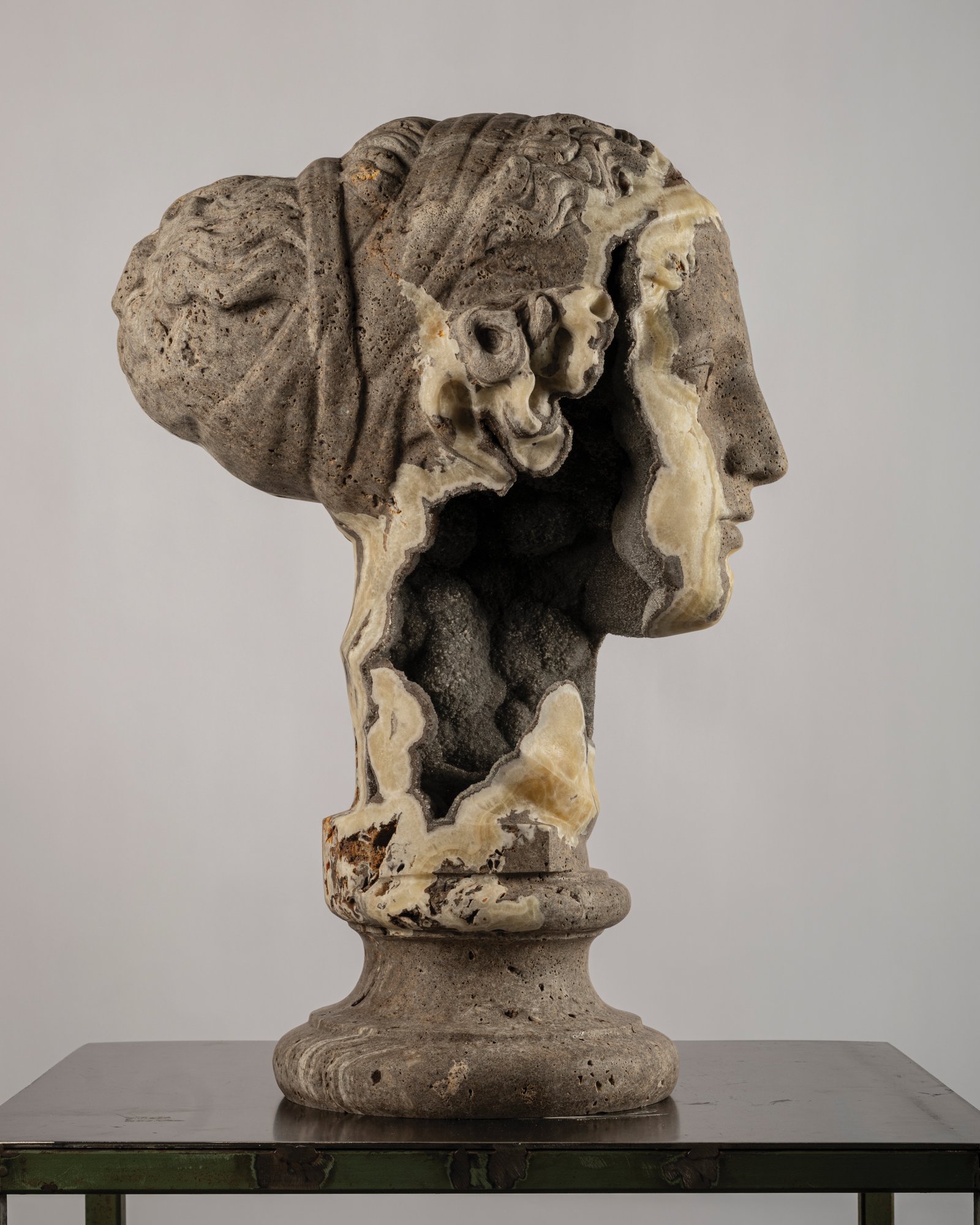
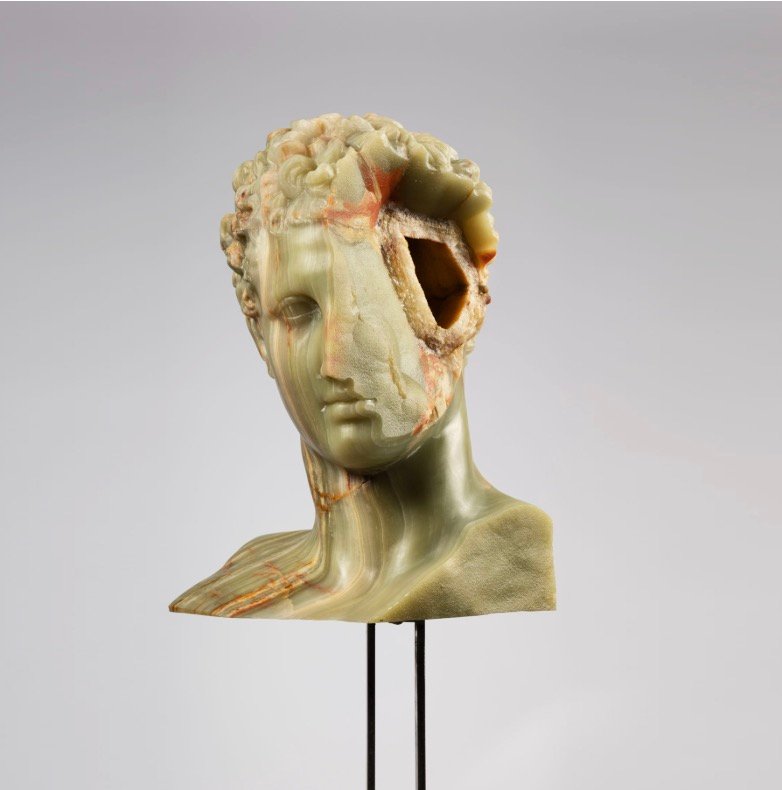
MASSIMILIANO PELLETTI: What appear to be imperfections in the material are stimulating elements for me because it becomes a kind of challenge in being able to transform them into virtues in the final work. I transform adversities into opportunities; More than that, these cavities often contain crystals which, in my opinion, offer not an absence, but a presence.
I like to bring my passions into the work, and one of them is definitely geology. I really love the geological history of matter—there are already stories within it—and that is why I choose onyx, sodalite or fossil stones. And I’m always looking for materials...
The following is our full interview with Massimiliano Pelletti from Issue 1.
—
MADINA TULAKOVA: Your work embraces the natural imperfections of stone. Flaws, cracks, and raw textures become integral to the final piece. How do you approach these elements as part of your artistic language?
MASSIMILIANO PELLETTI: What appear to be imperfections in the material are stimulating elements for me because it becomes a kind of challenge in being able to transform them into virtues in the final work. I transform adversities into opportunities; More than that, these cavities often contain crystals which, in my opinion, offer not an absence, but a presence.
I like to bring my passions into the work, and one of them is definitely geology. I really love the geological history of matter—there are already stories within it—and that is why I choose onyx, sodalite or fossil stones. And I’m always looking for materials that can convey something.
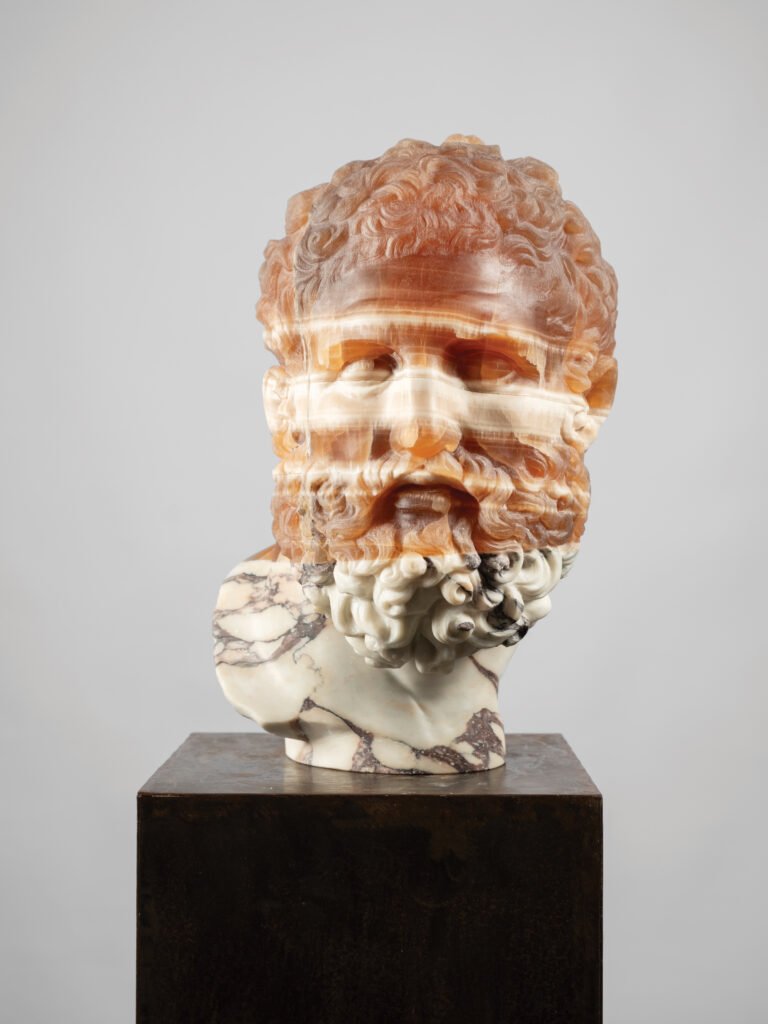
TULAKOVA: Sculpture, in many ways, is a performance between the artist and the material. A constant physical dialogue shaped by time, resistance and technique. Do you see it this way?
PELLETTI: The materials I choose have very particular characteristics, and the end result of my work is always a mediation between what I would like to do and what the material allows me, suggests to me. So the stone
plays a co-authoring role with me on the finished work.
Having this approach with the material, I consider myself a very democratic sculptor: I do not pretend to modify it to my liking but to establish a dialogue with it in order to achieve a final result together.
TULAKOVA: At what point in the sculpting process do you consider a piece complete?
PELLETTI: I consider the work finished when I see that subject and material reach a perfect balance, but above all I look for the sculpture to have a poetry and energy of its own.
TULAKOVA: Many of your sculptures reveal the internal textures of the stone—pores, crystals, and striations—allowing the viewer to engage with their intrinsic structure. How do audiences typically respond to this interplay between solidity and fragility? Do these reactions vary depending on the type of stone?
The public in front of my works is usually very attracted to the materials I carve and the effects that the stone reveals each time.
The combination of the typical solidity of the stone material, the sacredness of the chosen classical subjects and the fractures and cavities that are created during the work always rouse great interest. The most beautiful thing is when the collector or user feels the same energy that I felt while working.
TULAKOVA: The act of viewing sculpture is inherently performative, one that requires movement and changing of perspectives. How do you consider the viewer’s interaction with your work when shaping a piece?
PELLETTI: The creation of sculpture is an intimate moment in which a unique duplicity develops between the artist and the material. In fact, the first to observe it, is the artist then self, and their own gaze and point of view, which often changes according to the mood of a given moment. The gaze of the spectator is a later phase for me.
Personal Background and Daily Practices
TULAKOVA: You have a background in philosophy—how does this intellectual foundation inform your artistic practice and your way of engaging with the world?
PELLETTI: Studying philosophy was an important part of my artistic growth because, there, I was able to learn a language that I brought back into my art.
What I look for in my work is the aesthetic balance between the imperfection of the material and my creative action in handling the form within it. This awareness matured in me precisely by taking the course in Aesthetic Philosophy where I learned the notions to succeed in this; in my opinion this balance is a fundamental component to transmit poetry to the spectator who is in front of the work.
TULAKOVA: Has art always been in your family, or is it something you found your natural way to on your own?
PELLETTI: My first real approach to art was in the studio of my grandfather Mario, a skilled marble craftsman. With him, I was able to relive fascinating stories, the most representative being the one related to the restoration of Michelangelo’s Pieta, in which he took part together with other sculptors from Pietrasanta after a madman broke it when he entered San Pietro with a hammer in 1972.
Discovering art from a very young age, my approach to it started as a game and slowly, without even realizing it, I found myself with a technical knowledge.
My grandfather taught me the work of a sculptor even though he initially did not want me to learn, because he considered it too hard and tiring a job. Nevertheless, he was obliged because my presence in his studio was constant. Today, that playful aspect that I have experienced since I was a child continues to accompany me in my work, but the relaxation that as a child was exclusively linked to play, today that sculpture has become my profession, is dictated by the skills and confidence that I have acquired over time.
Pietrasanta has long been a revered hub for artists. How has living and working in this environment influenced your artistic sensibility? Do you have daily rituals both in and outside of work that shape your creative practice?
There is no doubt that growing up in a lively and artistically stimulating area like Pietrasanta influenced and shaped me.
For example, I grew up in laboratories where white marble reproductions of classical sculptures were made, and consequently classicism belongs to my experience.
As a matter of fact, my life is marked by a series of experiences and stories that the territory and the town where I was born gave me, so from a very young age, going around workshops, I came into contact with international craftsmen and artists who fascinated me with their stories. Seeing their sculptural projects realized was formative. I remember, for example, one time when I was still in the sixth grade, I entered a studio and found an unknown young Jeff Koons together with the star Cicciolina having their marble portrait made.
All this experience I have tried to bring back into my work by transforming what is a typical product of my town into a contemporary expression that has managed to be conveyed around the world.
Themes and Approach
TULAKOVA: Your work explores the impermanence of art and civilization, highlighting the inevitable passage of time. Do you approach themes of decay and transformation with a sense of optimism or melancholy?
PELLETTI: In reality I never give any indication of what I want to tell with my works, but I am happy for everyone to have their own interpretation and create their own story. My sculptures, in the moment they are finished, belong to everyone and it is right that everyone experiences their own emotions in front of them.
TULAKOVA: Are there particular cultural narratives or mythological themes you are eager to explore further in your work?
PELLETTI: For many years, I have been fascinated by African art, which is why I have been producing a series of works that combine classical Greek/Roman aesthetics with African aesthetics, achieving very interesting results for me. I believe that I will continue with this research in order to create new narratives and probe hitherto unknown terrain.
TULAKOVA: Your sculptures often seem like newly unearthed relics—how would you hope future generations will view your work?
PELLETTI: I don’t ask myself these kinds of questions; I live my creativity in the present without thinking about how it might be perceived in the future. What I like to think today is that in an increasingly barbaric world, I can be part of a sort of new Italian Renaissance.
TULAKOVA: Would you say your works are preservation of history or its reinterpretation?
PELLETTI: As Gustave Mahler said in one of his famous phrases, “Tradition is guarding the fire, not worshiping the ashes,” so my work starts from the classical tradition but with an eye to the present day.
Member Access
Free
Join New York-based Editra.
 John White
 Adrianne Rubenstein
 Kim Jansch
 Filippo Montani Fargna
 Karl Green
 Ophélie Ferlier-Bouat
 Marguerite de Ponty
 Kamel Mennour
 Richard Aubern
 Cici Thompson
 Franco Maria Ricci
 Fashion Desk