For our Art Travel Diary Series, we catch up with Filippo Montani Fargna and Kim Jansch, owners of Casa G. Hotel Firenze, on hidden Florence, local savoir faire, and building something that honors its past without being defined by it.
It’s around 10AM in Zurich and Filippo and Kim are all smiles as they introduce me to the hotel. I reminisce with them about my stay a couple of years prior, during my first visit to the city. “Do you remember which room and floor you stayed on?” asks Kim. “All of our rooms are so different, and the superior has so much character.”
The hotel feels like a collection of stories — travel memorabilia and antiques throughout. Initially a palazzo owned by the world-renowned noble Florentine Ginori family, proprietors of fine ceramics brand Ginori 1735, the building once served as a headquarters for production.
Filippo Montani Fargna and Kim...
For our Art Travel Diary Series, we catch up with Filippo Montani Fargna and Kim Jansch, owners of Casa G. Hotel Firenze, on hidden Florence, local savoir faire, and building something that honors its past without being defined by it.
It’s around 10AM in Zurich and Filippo and Kim are all smiles as they introduce me to the hotel. I reminisce with them about my stay a couple of years prior, during my first visit to the city. “Do you remember which room and floor you stayed on?” asks Kim. “All of our rooms are so different, and the superior has so much character.”
The hotel feels like a collection of stories — travel memorabilia and antiques throughout. Initially a palazzo owned by the world-renowned noble Florentine Ginori family, proprietors of fine ceramics brand Ginori 1735, the building once served as a headquarters for production.
Filippo Montani Fargna and Kim Jansch, owners of Casa G. Hotel Firenze, housed in the former Ginori 1735 ceramics factory.
“When designing Casa G., the first intention was to make a home rather than a hotel,” says Filippo. “The second element was authenticity, and to achieve that I had to trust my own sensibility. The architecture and heritage of the place already had something to say, and my job was simply to amplify that without overwhelming it.”
Filippo undertook the design of the hotel himself, resulting in a total of fifteen rooms across two floors. “The brass handles were custom-designed. The linen fabrics were printed with motifs we drew ourselves. Casa G. is furnished mostly with mid-century pieces from the 1950s, sourced over the past ten years through auctions and flea markets — as were the pictures and paintings. The other furniture was designed by me: the bedside tables, coffee tables, and consoles. The lamps, fabrics, and bed headboards are by Cecilia Pantaleo, whose sensibility I deeply admire.”
Both Filippo and Kim are deeply in love with the city and, above all, i fiorentini. “80% of Casa G.’s furniture was made-to-measure by local artisans,” says Kim. “If we are not collaborating with them directly, we make sure to send people their way.”
With rents rising and an influx of tourists and expats eating into the fabric of the city, they represent what it means to put down roots and support one another. We talk of savoir faire, generational businesses, and an inherited Italian warmth — something that feels increasingly elusive in an age defined by trends, consumption, and cold capitalism. Filippo, a native Florentine, recounts several institutions he grew up visiting and has watched slowly change. For Kim, it’s the proximity to others and a sense of community that feels most special. She speaks of a strong sense of identity — where everyone knows you for who you are — so unlike the anonymity of life in a big city.
Good evening. Mild out right now in Manhattan. Today's high was 73ºF. Tomorrow looks like 65ºF and drizzly. Paris Fashion Week reaches its final weekend. Read More
Paris gallery founder Kamel Mennour on artists, archives, and the work of building a contemporary program across generations. Madina TulakovaKamel Mennour. Read More
 Madina Tulakova
 Kim Jansch
 Filippo Montani Fargna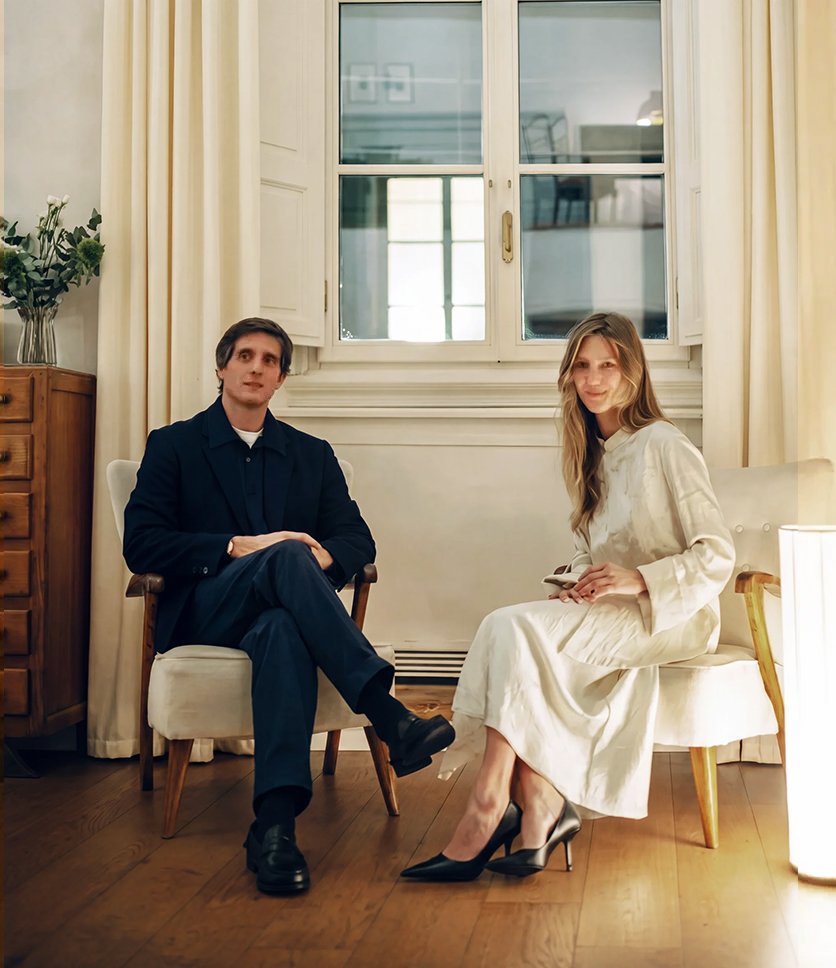
 John White
 Adrianne Rubenstein
 Karl Green
 Ophélie Ferlier-Bouat
 Marguerite de Ponty
 Kamel Mennour
 Massimiliano Pelletti
 Richard Aubern
 Cici Thompson
 Franco Maria Ricci
 Fashion Desk