 Cici Thompson
ROME—Shortly after NASA landed its first crew on the moon in July 20, 1969, Mario Schifano traveled across the U.S., relishing the energy that it had espoused, to find a location to shoot his film, Human Lab. He and princess Nancy Ruspoli visited the Pentagon and NASA in 1970. A relationship with the USA, as well as travels to the Far East and Africa, were a large part of his inspiration. Unfortunately also a part of his life were mental health issues and drug addiction that landed him in jail six times. For this, he was called un artista maledetto in certain Italian magazines, the ‘cursed’ artist of pop art, which he jokes about in an interview in 1983.
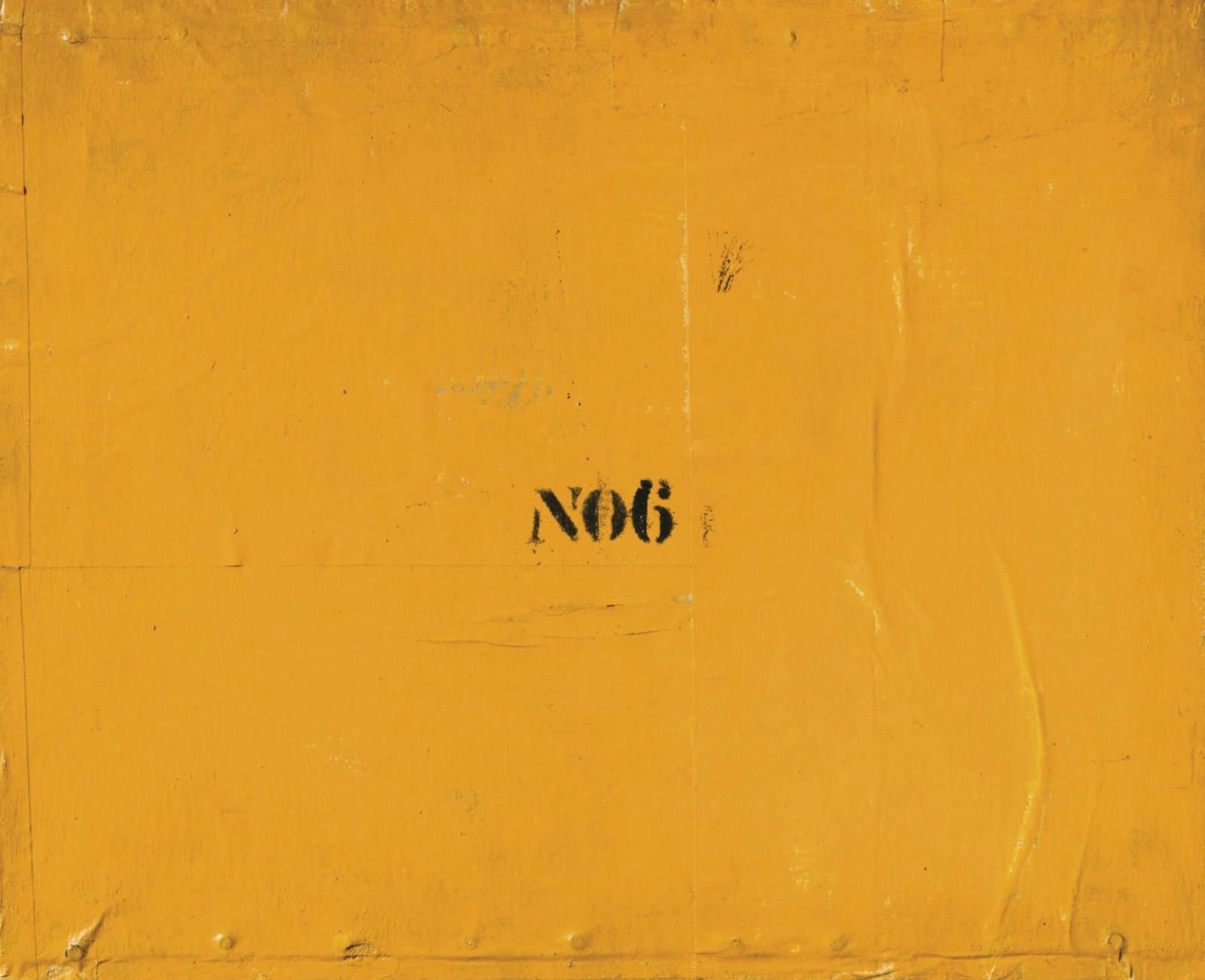
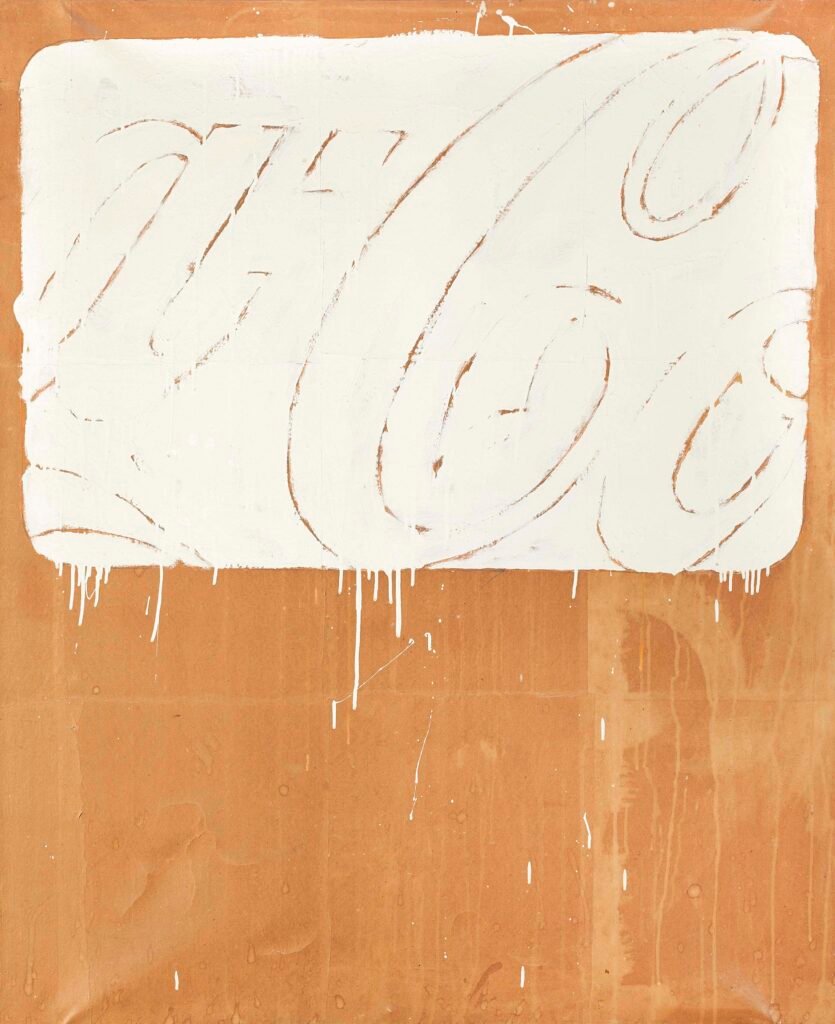
Born in Homs, Libya, his father was an archaeologist and restorer working on the excavations at Leptis Magna. His family moved to Rome during an evacuation from the African colonies. He worked at the National Etruscan Museum until he joined the military briefly, and when he came back he devoted himself to painting: In 1960, a cycle of monochrome paintings with stamped numbers and letters. His inclusion in the exhibition The New Realists at Sidney Janis Gallery in New York in 1962 set him alongside names like Warhol, Lichtenstein, Jim Dine and Christo. Submitted to the event was a “Propaganda” painting featuring part of the Coca-Cola logo.
In the early 60s, he made his first trip to America with his girlfriend, Anita Pallenberg, and stayed in New York, frequenting local icons like Andy Warol, Jasper Johns and Frank O’Hara. From this point on, his personal life was marked by drug use, covered widely in the press. In 1966, he spent three months in the Regina Coeli prison for marijuana, followed in the 1970s by four additional arrests and his eventual confinement in the psychiatric hospital of Santa Maria della Pietà. According to Italian writer Federico Sargentone, poet laureate Giuseppe Ungaretti (1888 – 1970) actively attended his trial and testified that “an artist is an individual who should not reside within the law of the common.”
He later went on to battle heroin addiction, at times trading artworks to dealers to the frustration of his gallerists. After several failed rehab efforts, he eventually did return seriously to painting, reappearing in the 1980s with a major retrospective in Rome and then a showing at the 1982 Venice Biennale. He died in Rome, in 1998, of a heart attack, and is survived by his wife, Monica, and a son, Marco.
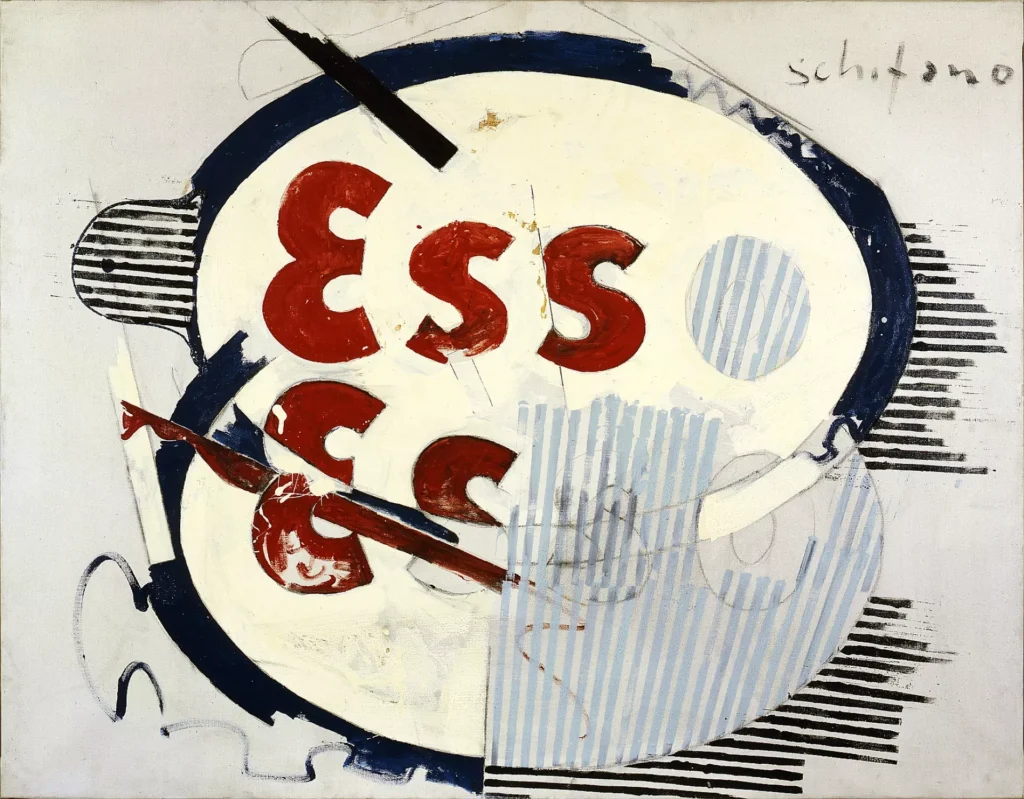
The exhibition at one of Rome’s most serious exhibition spaces, which began 17 March and runs until 12 July this summer, highlights Schifano’s obsession with “mediated image”, a term which, according to Milan art foundation of Giorgio Marconi, describes a new objectivity focusing on how the world is mediated by mass media (movies, signals, cartoons, advertising).
The current exhibition in Rome covers his works all the way up to the 1990s. A rotunda and seven large rooms on the main floor of Palazzo Esposizioni offer a chronological telling of his artistic biography, from his early monochromes to political commentary on Vietnam, to the Gulf War of the 1990s.
His works have steadily gained interest, with Tempo moderno (1962), a work of enamel and graphite on paper measuring 70.9 x 71.3 in (180 x 181 cm) selling for over $3 million at Christie’s in London in 2016.
Mario Schifano
17 March to 12 July, 2026
Palazzo Esposizioni Roma
Via Nazionale 194, 00184 Rome
Website
 Marguerite de Ponty
 Madina Tulakova
 Richard Aubern
 Bob Loblaw
 John Hudson White