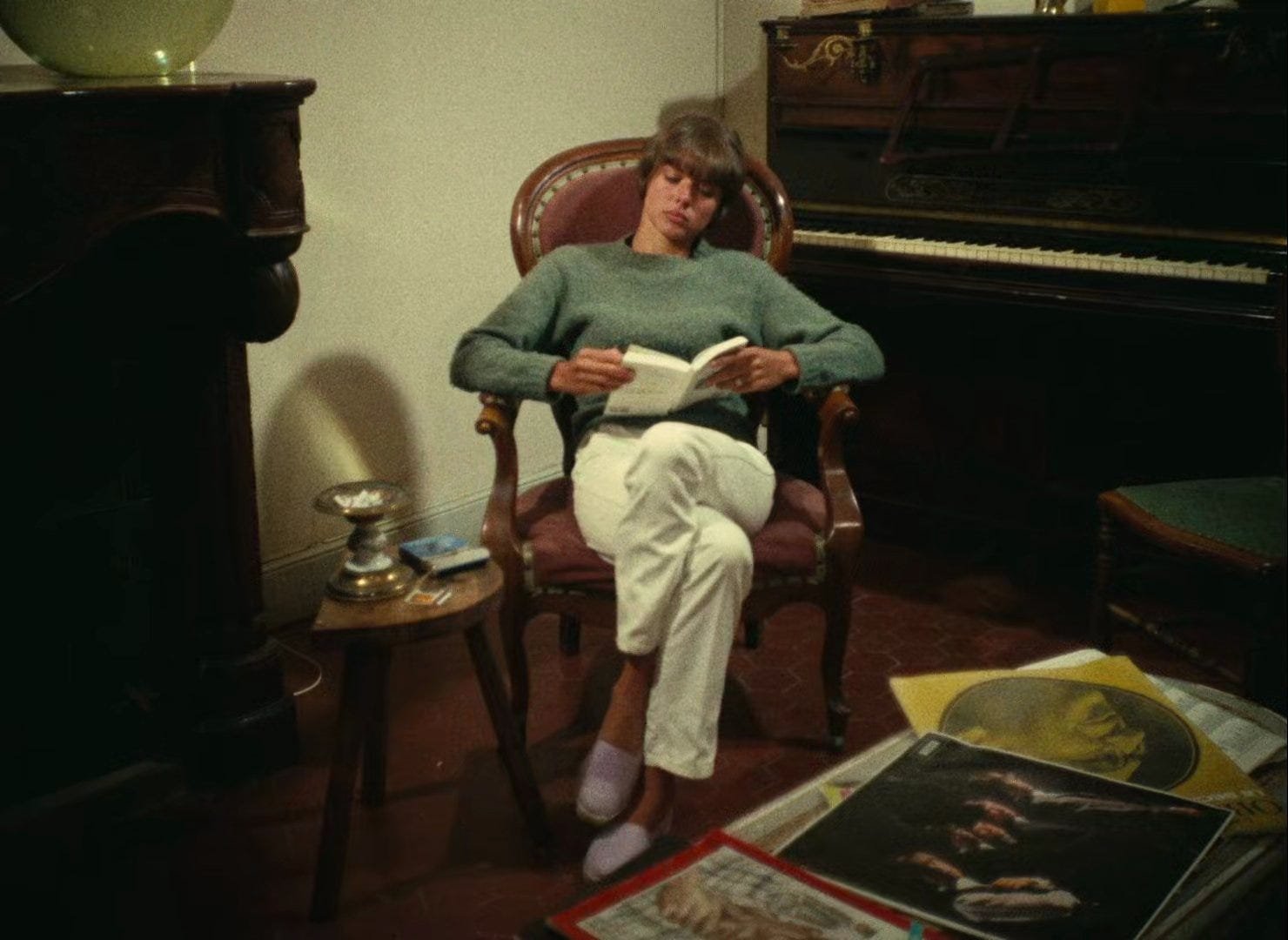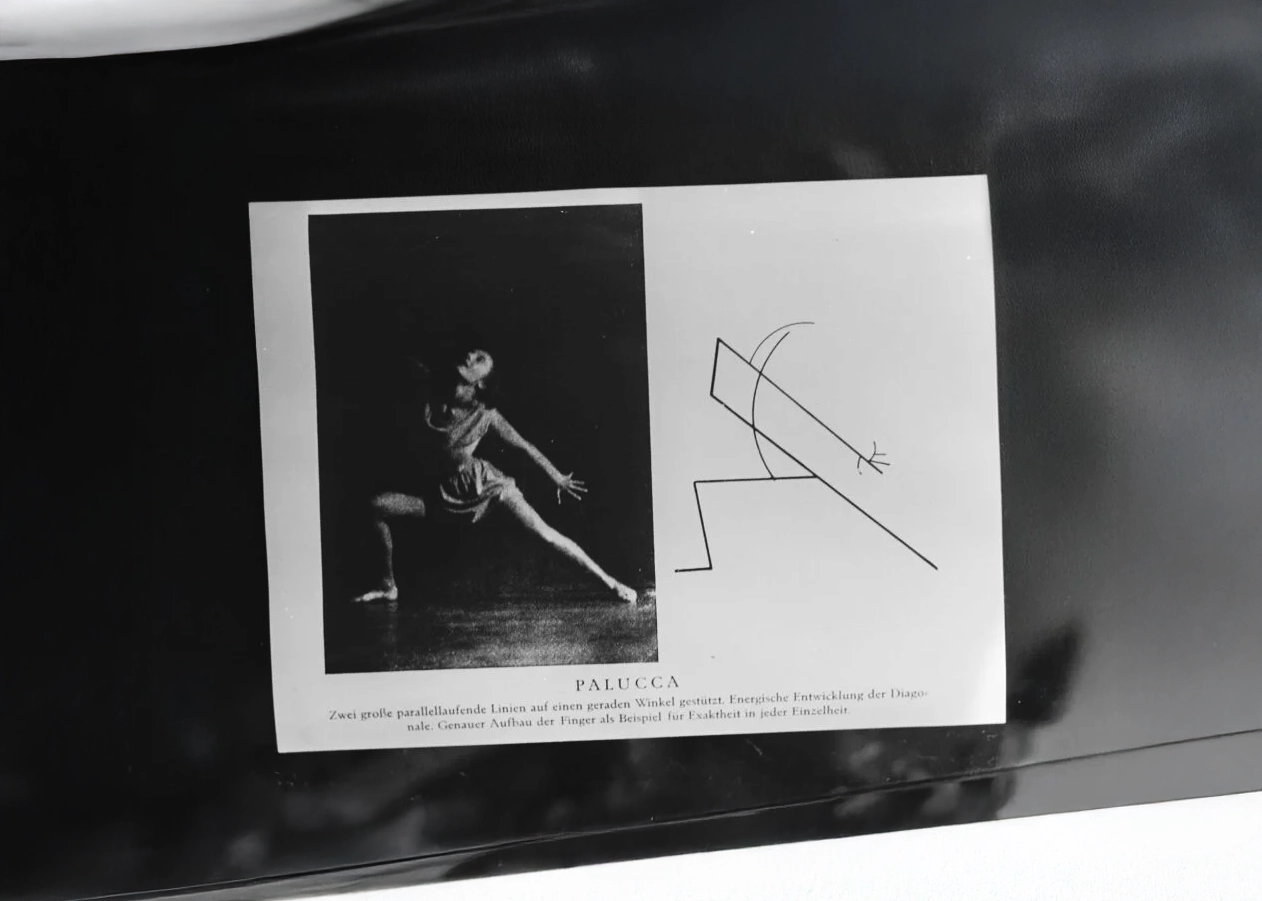
Wassily Kandinsky, a painter of color and form, once envisioned a future where dance would shed its ornamental constraints and move toward abstraction. In Concerning the Spiritual in Art (1911), he criticized traditional ballet for its inability to express the ineffable, calling instead for a new movement language, one that would evoke the unseen forces of emotion and thought.
Zadie Smith, a novelist and essayist known for her sharp intellect and stylistic range, wrote in a 2016 interview with The Guardian: “The connection between writing and dancing has been much on my mind recently: it’s a channel I want to keep open. It feels a little neglected – compared to, say, the relationship between music and prose – maybe because there is something counter-intuitive about it. But for me the two forms are close to each other: I feel dance has something to tell me about what I do.”
Wassily Kandinsky, a painter of color and form, once envisioned a future where dance would shed its ornamental constraints and move toward abstraction. In Concerning the Spiritual in Art (1911), he criticized traditional ballet for its inability to express the ineffable, calling instead for a new movement language, one that would evoke the unseen forces of emotion and thought.
Zadie Smith, a novelist and essayist known for her sharp intellect and stylistic range, wrote in a 2016 interview with The Guardian: “The connection between writing and dancing has been much on my mind recently: it’s a channel I want to keep open. It feels a little neglected – compared to, say, the relationship between music and prose – maybe because there is something counter-intuitive about it. But for me the two forms are close to each other: I feel dance has something to tell me about what I do.”
This gives the whole idea of dancing about architecture new meaning.
Zadie Smith’s Dance Lessons for Writers considers movement as a kind of geometry—bodies tracing lines in space, sentences etching their rhythm across the page. Writing and dance, she suggests, are both disciplines of position, tension, and release. She begins with Martha Graham’s famous assertion that an artist must “keep the channel open,” then shifts to the figures of Fred Astaire and Gene Kelly, who embody two distinct geometries of motion.
Astaire is a floating parabola, skimming across the stage in endless arcs, while Kelly is a series of perpendiculars—knees bent, weight dropped, firmly planted. The difference, Smith argues, is not just in dance but in prose. Nabokov, like Astaire, constructs intricate, self-contained curvatures. George Saunders, like Kelly, understands the weight of language, its direct impact.
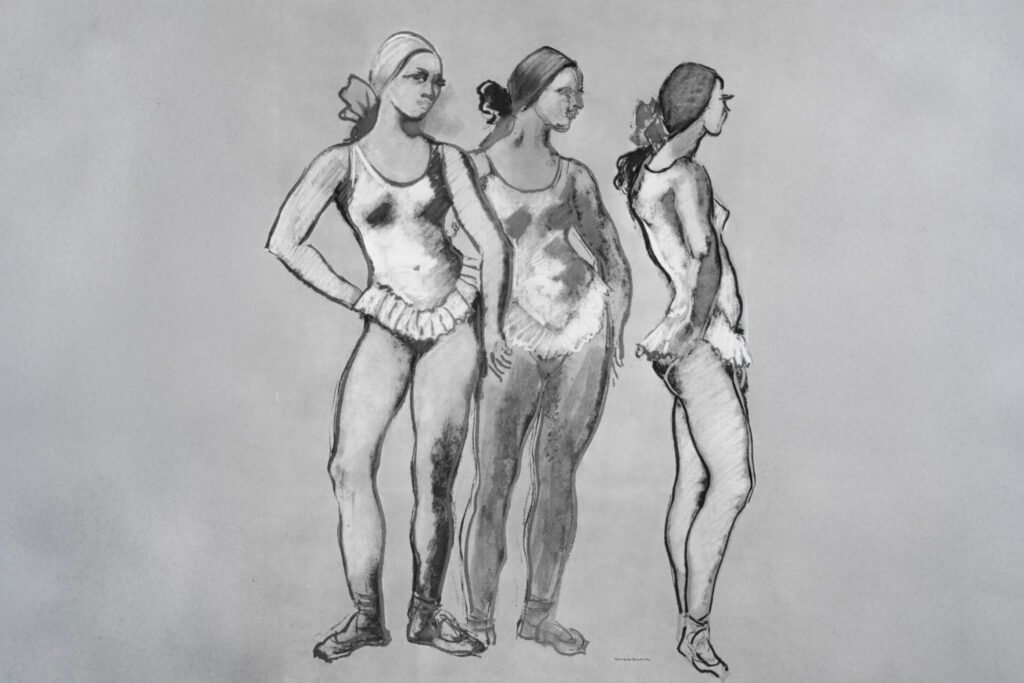
Photos by Charlotte Rudolph.
From there, she widens the frame: Michael Jackson as a master of fixed angles and sharp contours, each movement an exclamation; Prince, by contrast, a vanishing act, a line that never quite closes its own shape. Beyoncé’s choreography forms a militarized auto-tuned grid, bodies in synchronic alignment, whereas David Byrne moves in erratic, off-kilter gestures—less symmetry, more collision. In Smith’s reading, even syntax follows this logic: the clipped precision of Joan Didion versus the sprawling, serpentine architecture of a writer like Octavia Butler.
Ultimately, she asks what kind of geometry a writer—or a dancer—should inhabit. Some artists impose structure, carve clear angles, command space. Others slip through it, suggest rather than state, dissolve instead of define. A great novel, like a great dance, is a composition of shapes—lines that converge and disperse, arcs that resolve or remain suspended. The lesson, perhaps, is that language, like movement, is never just about what is said, but about the spaces it leaves behind.
Things happening in New York this Winter. See the newly restored Frick, now open. Sotheby’s presents Icons: Back to Madison from 13 to 21 December... Text by Cici Thompson. Read More
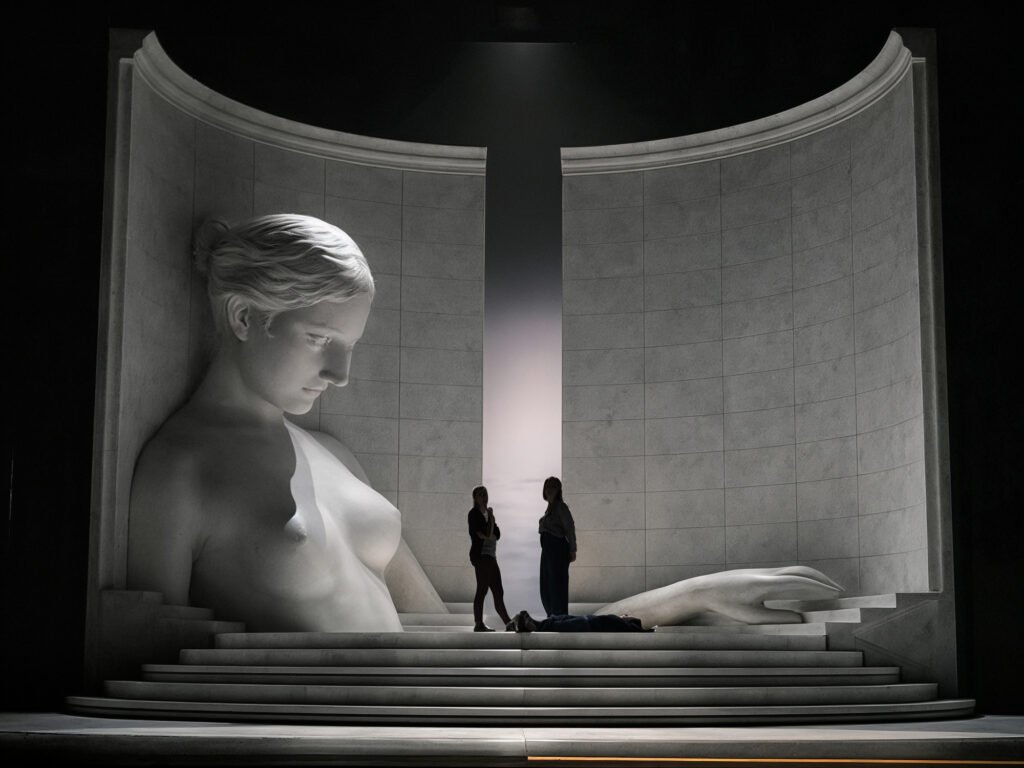
Venere de Medici, 2022, pink onyx. Edition 1/1. Photo by Nicola Gnesi. Courtesy of Galerie Bayart, Paris.
What appear to be imperfections in the material are stimulating elements for me because they become a kind of challenge, in being able to transform them into virtues on the final work. Text by Madina Tulakova. Read More
Corita Kent, “Untitled, Red Shoes, Los Angeles” (1967), 35 mm slide, Corita Slide Collection (photo courtesy Corita Art Center) from Corita Kent: The Sorcery of Images in Los Angeles.
NEW YORK—To remember that photography was even once a fresher medium than it is today. I mean, jolting. In the last century, when photo stories... Text by Pina Lomb. Read More
Raphael, Self-portrait (1506–08). Florence, Uffizi Galleries, Gallery of Statues and Paintings. Photographic Cabinet of the Uffizi Galleries – Courtesy of the Ministry for Cultural Heritage and Activities and Tourism.
UPTOWN—In spring 2026, New York’s Metropolitan Museum of Art will present the most extensive U.S. exhibition ever dedicated to Raphael, according to Artnet, offering a... Text by Marguerite de Ponty. Read More
Auguste Renoir, Study for The Great Bathers (1884 to 1887). Photo: The Morgan Library & Museum.
UPTOWN—A large show of works on paper by Pierre-Auguste Renoir is being organized for this October by Colin Bailey, the Morgan's new director, according to... Text by Dannik. Read More
DOWNTOWN—British artist Louise Giovanelli is now showing new work at Grimm 54. The exhibition, Still Moving, goes through 21 June 2025, and features a bunch... Text by Dalia Morgan. Read More
ROME—In 2022, the city of Rome hosted a comprehensive exhibition dedicated to Francesco Messina at Villa Torlonia. Titled Francesco Messina. Novecento Contemporaneo, the show brought... Text by Dannik. Read More
Slip House, the brand new gallery opened at the base of a 19th-century, three-story former carriage house at 246 East 5th Street.
DOWNTOWN—Every two decades is a response to the previous two. After decades of irony, the purposeful ugliness of the 80s and 90s (“Anything that’s beautiful... Text by Cici Thompson. Read More
BASEL—Going to Art Basel is always a unique experience. For the majority, the art on display is merely entertainment; after all, any work, whether mighty... Text by Madina Tulakova. Read More
Franco Maria Ricci in 1984, at the launch of FMR U.S.A. at the New York Public Library.
Caverns were probably the first labyrinthine structures human beings came into contact with, in a distant past. And I, too, rummaged through my own past, finding a version of myself as the guise of a young amateur speleologist, equipped with the right clothes, flashlights, ropes, and climbing-irons. I was a second-year student at the Faculty of Geology and, with some friends, I had founded a so-called Cavern Society. My weekdays moved along on the surface, in the sunlight, while my weekends were usually devoted to the dark bowels of the earth. Text by fmr. Read More