 Bob Loblaw
PARIS—A Paris court has sentenced six Georgian nationals in connection with the theft of rare nineteenth-century books from French libraries, including early editions of works by Alexander Pushkin.
The verdict, delivered in June 2026, followed a wider Europe-wide investigation into a series of rare-book thefts between 2022 and 2023. According to Europol, at least 170 rare books were stolen from libraries across Europe, with estimated losses of about €2.5 million. The stolen books included works by Pushkin, Nikolai Gogol, and Mikhail Lermontov.

Investigators said the thieves used fake identities to enter libraries and request rare books in reading rooms. In some cases, they studied the books, photographed them, measured them, and later replaced the originals with sophisticated copies.
Known affected institutions include the Bibliothèque nationale de France in Paris, the Diderot Library in Lyon, Vilnius University Library, and the National Library of the Netherlands, also known as KB, or Koninklijke Bibliotheek, which means Royal Library in Dutch. Le Monde reported that ten original Pushkin editions were stolen from the Diderot Library in Lyon in July 2023, including a first edition of Boris Godunov.
The French court handed down sentences ranging from an eighteen-month suspended sentence to seven years in prison. None of the stolen works has been recovered.
These are some of the specific Pushkin editions confirmed as stolen from KB:
Ruslan and Lyudmila, St. Petersburg, 1828.
Pushkin’s first major published poem, originally issued in 1820 and later revised. It is a mock-epic fairy-tale poem based on Russian folklore, and helped establish Pushkin as a major literary figure. The stolen KB copy was an 1828 edition.
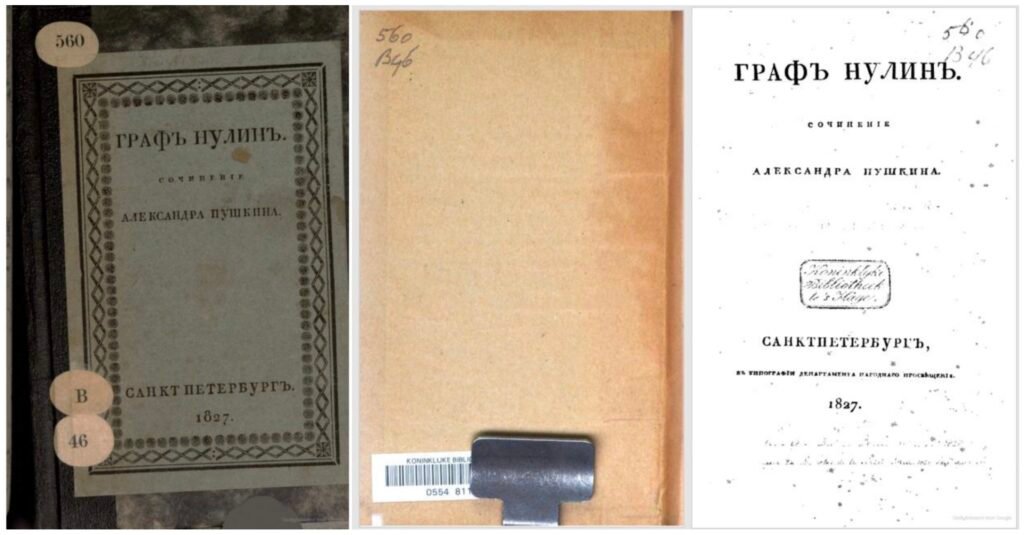
Graf Nulin, St. Petersburg, 1827.
A comic narrative poem by Pushkin, written in a lighter and more satirical mode. It shows Pushkin working outside solemn national-poet territory, using irony and social comedy. The KB copy had handwritten notes on the front page.
Poltava, St. Petersburg, 1829.
A narrative poem about Ivan Mazepa, Peter the Great, and the Battle of Poltava. It places Pushkin inside Russian imperial history and the politics of Ukraine, making it especially charged now. The stolen KB copy was an 1829 edition.
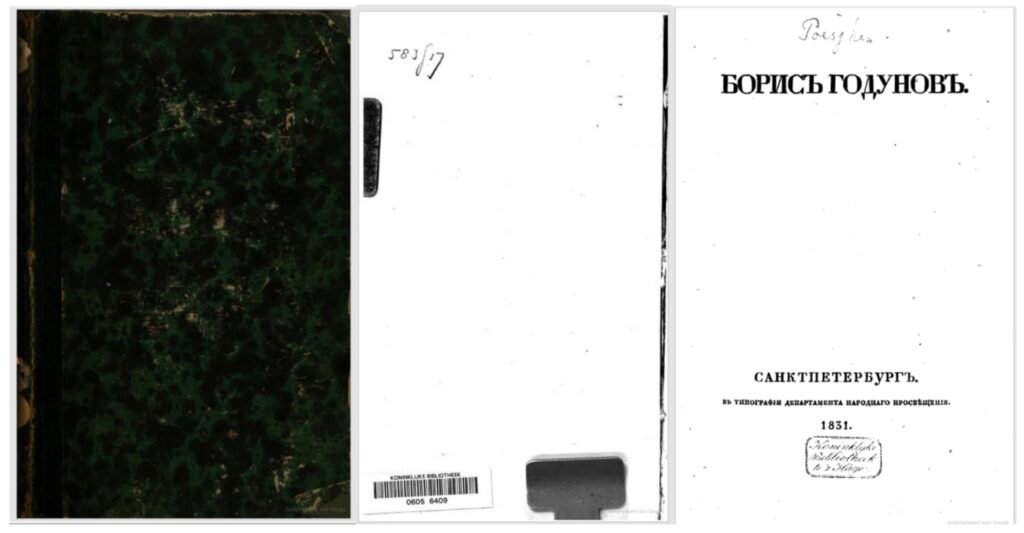
Boris Godunov, St. Petersburg, 1831.
Pushkin’s historical drama about the Russian tsar Boris Godunov and the instability of power after Ivan the Terrible’s dynasty. It is one of Pushkin’s central works because it helped reshape Russian drama around history, politics, and legitimacy. The KB copy had handwritten notes on the front page.
The Gypsies, Moscow, 1827.
A narrative poem written after Pushkin’s southern exile. It follows a Russian man who joins a Roma community but cannot accept its freedom on its own terms, revealing Pushkin’s thoughts about exile, desire, jealousy, and the limits of romantic escape.
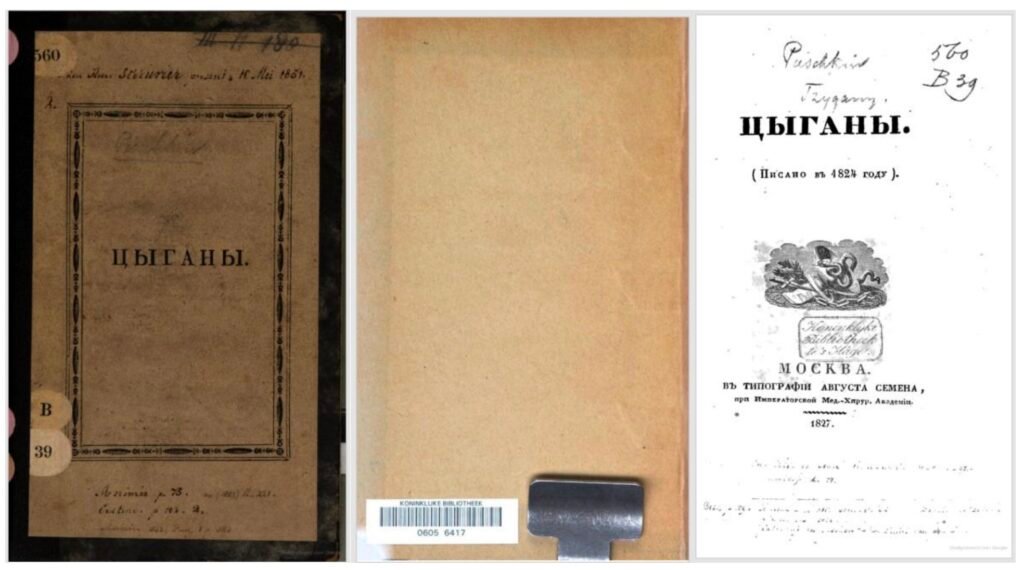
The Prisoner of the Caucasus, St. Petersburg, 1824.
A narrative poem about a Russian captive in the Caucasus, helping make the Caucasus a major literary setting in Russian Romantic writing. The stolen KB copy was not digitized by the library.


 Pina Lomb
 John White
 Cecilia Knapp

 Richard Aubern
 Rupert Taylor
 Alexandra Kleeman
 Melissa Mesku
 Chloe Caldwell
 Art History