 Pina Lomb
At fourteen, Gustav Klimt received a scholarship to Vienna’s School of Applied Arts. The son of an engraver and one of seven children, he spent his teenage years learning the strict academic techniques of decorative painting rather than behaving like the rebellious modern artist he later became. While still young, Klimt, his brother Ernst and Franz Matsch began securing commissions to decorate theaters and public buildings.
Klimt appears to have been private, disciplined and intensely focused on his work. He rarely explained himself publicly and never painted a self-portrait. He also resisted Vienna’s conservative art establishment, helping to establish the Vienna Secession and eventually abandoning major public commissions after his paintings for the University of Vienna were attacked as indecent.
Gustav Klimt: Women, now at Gladstone’s uptown gallery, begins with a 1902 study for the Beethoven Frieze and concentrates on drawings from Klimt’s mature period. Many were made between approximately 1902 and 1913, when his line became freer and his drawings increasingly functioned as independent works rather than simply as preparations for paintings.
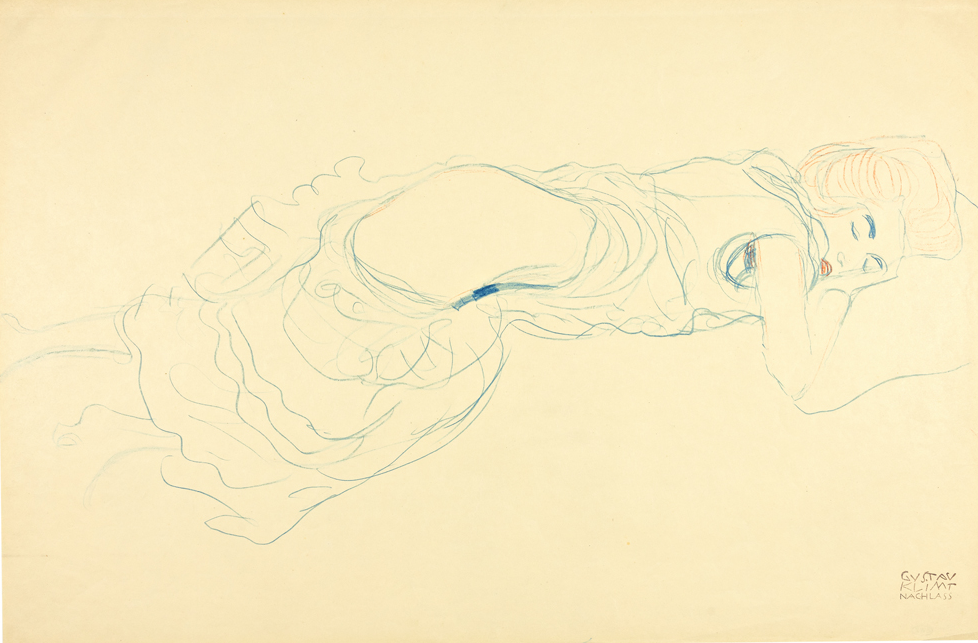
The women in these drawings were generally anonymous studio models, not the wealthy society figures associated with Klimt’s formal painted portraits. Klimt kept models in his studio and rapidly recorded positions or movements that interested him. Gladstone describes some as lovers, but the identities and personal circumstances of most remain undocumented. What survives is an unusually large record of women resting, posing, sleeping and sometimes touching themselves, without the elaborate gold surfaces of Klimt’s paintings.
The drawings arrived uptown through a collaboration between Gladstone and London dealer Richard Nagy, who has specialized in Klimt and Egon Schiele since the 1980s. At least one principal work, a study for Water Serpents II from around 1905–06, is presented courtesy of the Gustav Klimt Nachlass and Nagy.
And More
Several other painting exhibitions are open nearby.
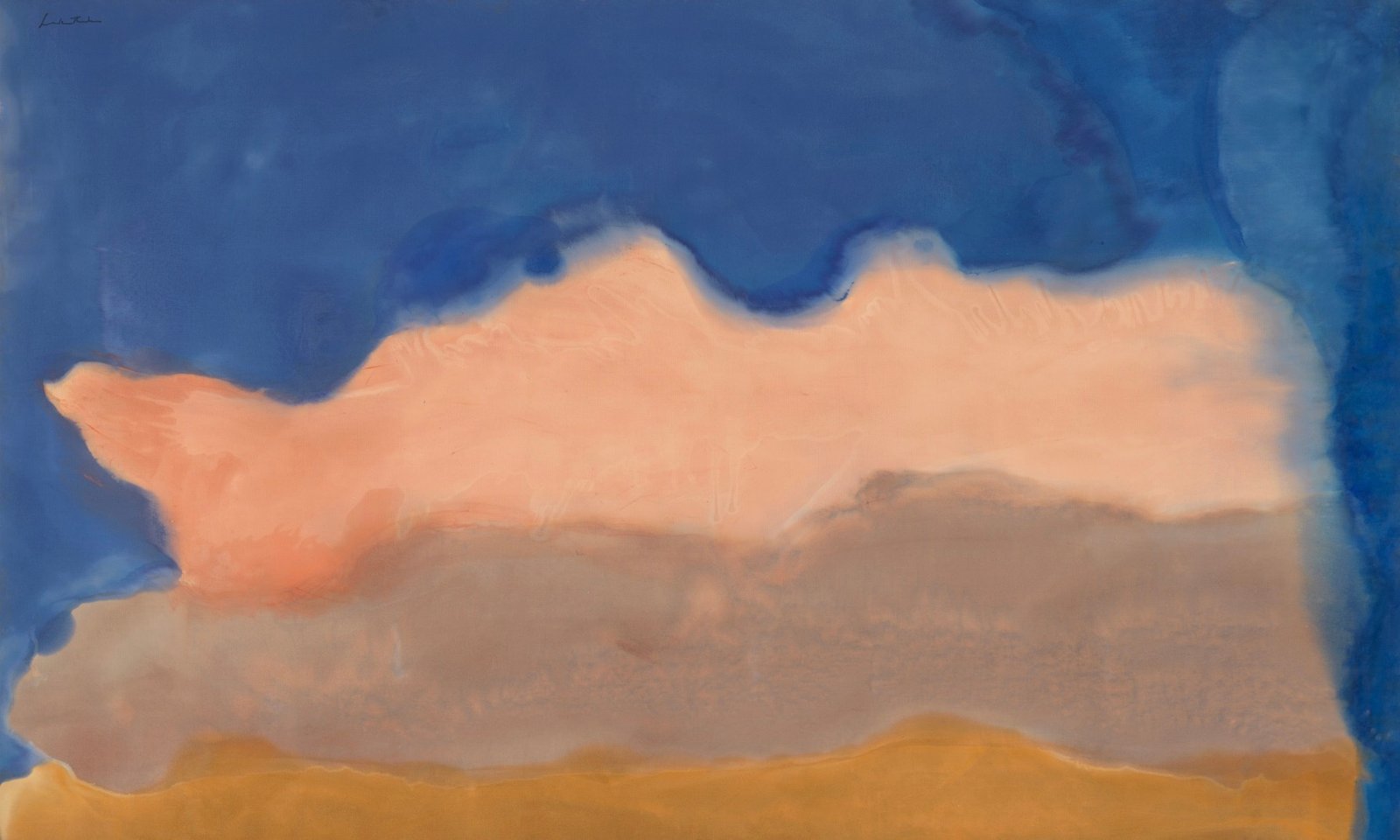
New York painter Helen Frankenthaler, known for her soak-stain technique, is represented at Gagosian by more than twenty large paintings made between 1960 and 1992, showing how her approach changed across four decades.
German painter Gerhard Richter, known for blurred, photograph-based images and abstraction, is the subject of Landschaften at David Zwirner, where landscapes from across his career are shown beside abstract works.
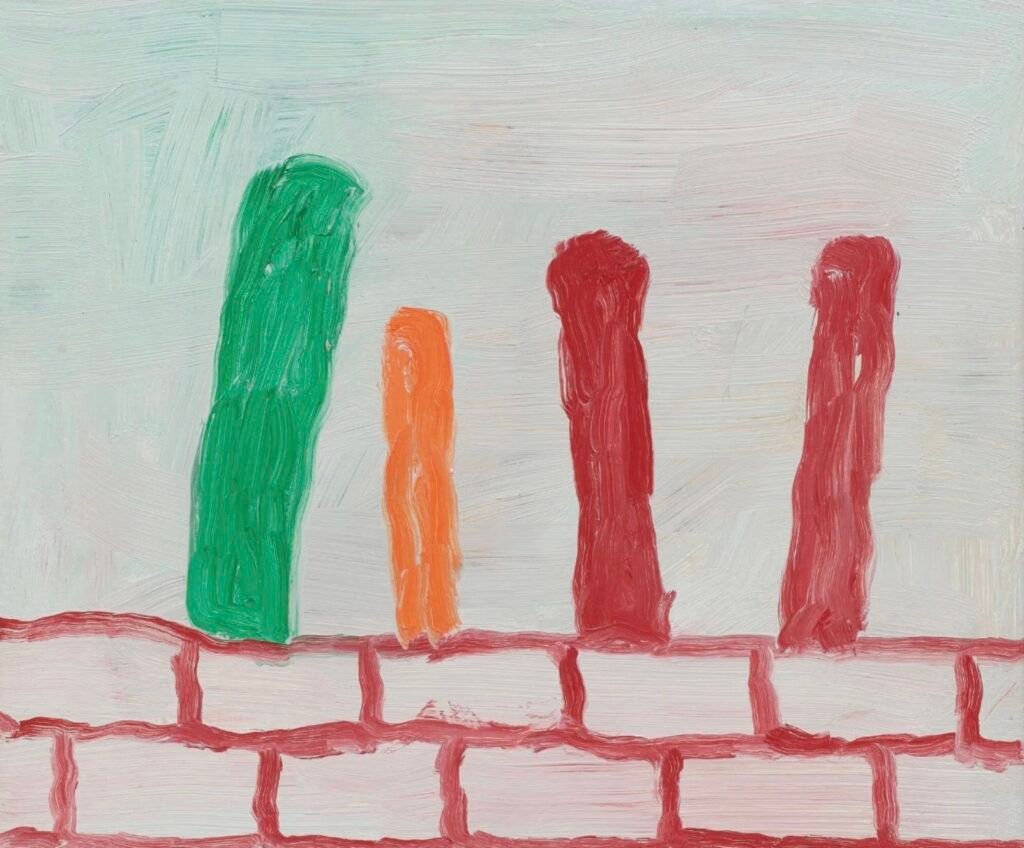
Montreal-born Philip Guston, known for abandoning Abstract Expressionism for blunt, cartoon-like figures, is shown at Hauser & Wirth through intimate paintings and drawings about his life with the poet Musa McKim.
Shows
Gladstone
130 East 64th Street
Gustav Klimt: Women
15 May–17 June 2026
Gagosian
522 West 21st Street
Helen Frankenthaler: The Moment and the Distance
30 April–2 July 2026
David Zwirner
537 West 20th Street
Gerhard Richter: Landschaften
7 May–10 July 2026
Hauser & Wirth
443 West 18th Street
Life With P.: Philip Guston, Paintings and Drawings 1964–1978
21 April–10 July 2026
Also
Eric Firestone Gallery
40 Great Jones Street
Women Across America: 1945–1979
12 May–31 July 2026
 Madina Tulakova
 Ophélie Ferlier-Bouat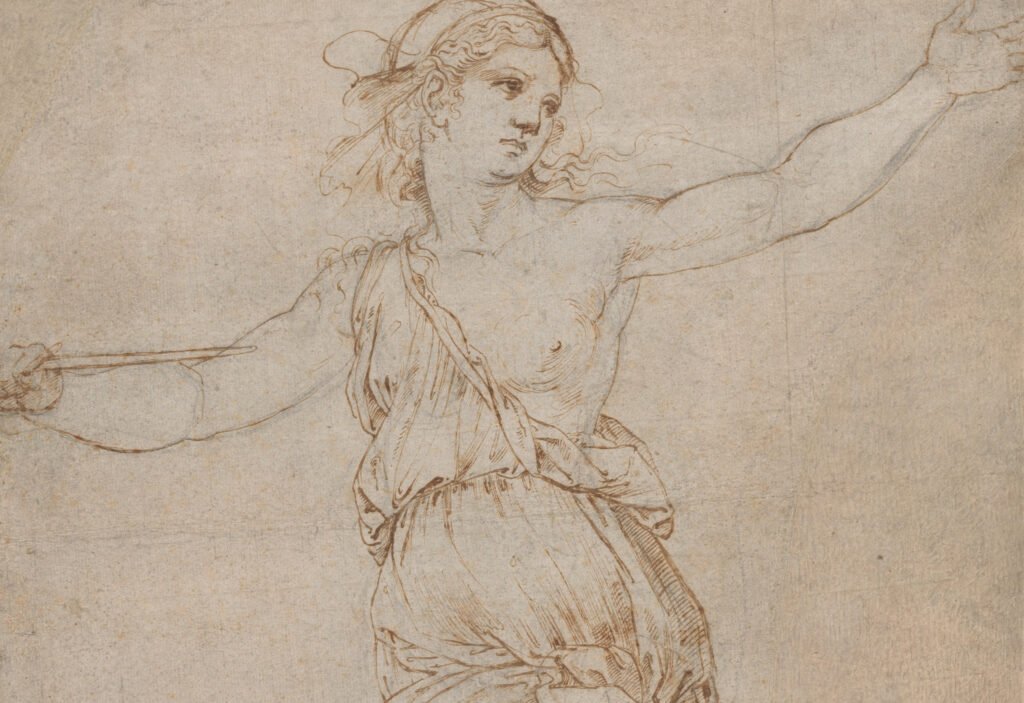
 Marguerite de Ponty
 Kamel Mennour
 Massimiliano Pelletti
 Richard Aubern
 Bob Loblaw
 Cici Thompson
 John White
 Franco Maria Ricci
 Archival Photos